
Listening for the Moho Pererū
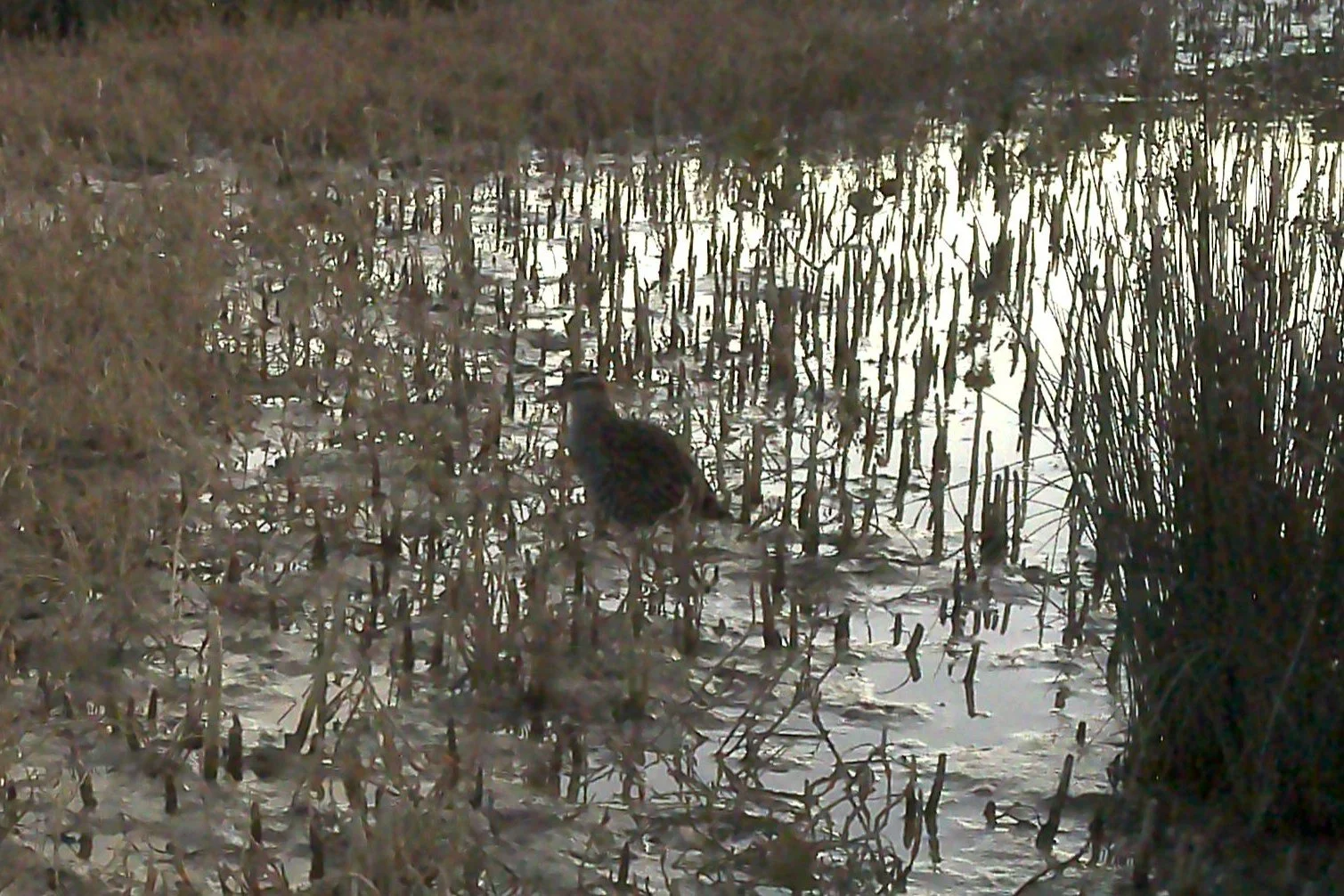
Moho pererū - the banded rail - is a secretive bird. Buff-bodied with black stripes, it’s built to disappear into dense wetland margin the moment anyone gets close.
"You mostly know they're here by the call, not by seeing them," says John Williams, Community Waitākere's Environmental Restoration Coordinator. "When we're out working and you hear one, that's when you know the habitat's doing its job."
Every metre of pampas replaced with the right native planting is a metre more of cover a bird like that needs to survive. Six months ago, people who walked past this stretch of Ōrangihina Reserve in Te Atatū didn't know there was a stream at the bottom. The pampas - cutty grass, to anyone who's fought it - had taken over so completely that a waterway had entirely disappeared from view.

Rangatahi from Ama Civil spent weeks bringing it back - cutting back pampas, kikuyu and honeysuckle with brush cutters and hand tools, clearing 1,400 square metres of ground. It's hard, unglamorous work, and must happen first.
Then, on a Sunday in early August, around 40 people turned up to plant it. In a single morning, they put nearly 1,000 native plants into the cleared ground - wetland trees, flood-resilient species, plants chosen to hold the banks and feed a coastline that's been losing ground for decades.
“It’s a great privilege to be part of our future in te taiao” and “we should do these every month!” was some of the feedback from people who came on the day.

It's part of a planting season that's now seen close to 2,000 plants go in across the reserve, alongside 55 cubic metres of mulch shifted by hand.
Young people from Oranga Tamariki carried and planted hundreds more in the reserve's harder-to-reach corners. Students from Arohanui Special School alongside the Mulching Marvels moved the mulch, barrow by barrow. Forest & Bird's volunteers keep the trapping and weeding going in between planting seasons, and were there on the day, talking to local people about how to stay involved. Community Waitākere's environmental team oversee the site day to day - the ongoing work of trapping, monitoring and keeping the ground in shape between planting seasons.
The name Ōrangihina comes from Rangihina, an ancestress of Te Kawerau ā Maki - a connection Te Kawerau ā Maki continue today through Active Whakapapa, a guided hīkoi through the area sharing pūrākau, whakataukī, and waiata tied to this stretch of harbour.
The change so far is a numbers game: a stream visible again, a stretch of coastline replanted. People who walk the reserve daily stopping to thank you - unplanned, repeated feedback that comes from someone noticing their local park looks different.
Ōrangihina is 85 hectares. What's gone in this planting season is a fraction of what is needed, and the work doesn't stop when the planting day ends. Forest & Bird run a weekly weeding group, working with residents who walk the reserve often enough to catch new growth before it takes hold again.
Community Waitākere will hold at least two more planting days next year - and around that, the reserve keeps its own rhythm: acoustic recorders and in-person bird counts tracking who's moving back in, ongoing trapping and pest monitoring, the unglamorous work of keeping invasive species down so what's already gone in actually gets the chance to grow.
“It’s less of a finish line, and more of a cadence” says Zephyr Melchior-Edgecombe, from Community Waitākere's environmental team. “One we see more people step into each season.”
